
Mizuki Ogawa directs her first Japanese film, set in Osaka, about people chasing dreams, a guitar that connects them, and a new song.
September/7/2026 13:54Related Groups & Members


The "Code for Tomorrow Production Committee" is launching production on the film "Code for Tomorrow," scheduled for theatrical release in autumn 2027. The director is Ogawa Mizuki (Rea), formerly of SECRET NUMBER, who worked as a K-pop idol in South Korea. This will be her first film work as a director in Japan. The filming location is Osaka. What "Code for Tomorrow" depicts is not only the glamorous side of people who pursue dreams. It also depicts the confusion and conflict that arise while pursuing dreams, the gap between the future one had imagined and reality, leaving dreams behind, stopping in place, and even so, trying to face forward once again. The story layers in Mizuki's own feelings and conflicts that she has actually experienced while working as an artist, as well as the worries and setbacks that the cast members have each experienced in their own lives. Rather than reproducing one person's true story as it is, it weaves together the "true emotions" felt by people who have actually chased dreams into one story. In "Code for Tomorrow," an important presence that connects the story is a single guitar. A single guitar passes from hand to hand among the characters. However, what is inherited is not only the guitar. The feelings, experiences, words that could not be put into words, and dreams contained within it also connect to the next person. The single guitar travels through the story as a "baton" that connects those feelings from person to person. The theme song is "BRAND NEW CODE." The lyrics for this song are written by the director Mizuki Ogawa herself. She connects the feelings depicted in the film and the emotions she herself experienced while pursuing her dream into the words of one song. "BRAND NEW CODE" is not merely a theme song prepared for the film. It also appears in the film as an important song in the story, born when the characters who are lost in their dreams bring together their respective feelings. The artist who will sing the real-world "BRAND NEW CODE" is planned to be selected through an audition. Also, another attempt by "Code for Tomorrow" is to connect fiction and reality, two times. In the main film as well, Mizuki continues filming the characters with a camera, and in the end edits hundreds of hours of recorded material to complete one film called "Code for Tomorrow." And after the end credits, there is an interview in which the performers themselves appear not as the film's characters, but as themselves. There is no script and no specified answers. Mizuki asks about "what they felt through the work," "what they want to challenge from here," and "their current selves," and finally closes the work with an interview of Mizuki herself. The film that began as fiction connects to reality at the end. The newcomer selected as the theme song artist will, toward the film's release, take on a promotion tour across all 47 prefectures of Japan, carrying a single guitar and the theme song "BRAND NEW CODE." From a place where their name is not yet known, they will deliver the film and theme song with their own voice. They will travel around Japan, meeting people in each place, delivering songs, and sometimes facing the reality that they cannot reach people as they would like. The encounters and words born there, the gradually increasing support, and the person's own changes will also be recorded as a documentary continuing from the audition. And the goal of the challenge to travel through all 47 prefectures is Korea. The newcomer who delivered "BRAND NEW CODE" across Japan will then cross the sea and challenge event promotion in Korea. In addition, the theme song "BRAND NEW CODE" is also scheduled for CD release in both a domestic edition and a Korean edition. Attention is being drawn to the film "Code for Tomorrow," which plans various developments expanding from the film, including filming in Osaka, production of the theme song "BRAND NEW CODE," CD releases in Japan and Korea, a documentary following the process from audition to release, and promotion connecting Japan's 47 prefectures to Korea. Mizuki Ogawa's comment: I debuted as a K-pop idol, and now that I have left the group, I am walking toward a new dream. I am not a special person. I am an ordinary person who is chasing dreams, getting lost, and living while taking detours. To be honest, the present me is in a place completely different from the future I envisioned when I went to Korea. Of course, now I think that all of it was necessary experience. Even so, I have been told many times that I "failed." Each time, I thought about it. Who decides what failure is? What is success? Is a person who could not fulfill a dream really a failure? I have lived while carrying that unanswered question all along. In my life so far, I have experienced setbacks, loneliness, betrayal, jealousy, joy, happiness, tears, smiles, and countless emotions. Chasing dreams is not beautiful alone. At times, it can hurt people and greatly change a life. Even so, I think that a dream is not something that can be spoken of only in terms of whether it comes true or not. Even if one stops in the middle, that time is never wasted. It remains in someone, and eventually is handed down to another person's future. "Code for Tomorrow" was born from such feelings. This film is not a success story of someone who achieved a dream. It is a story of regeneration for people who were hurt by dreams. And at the same time, it is also an answer to the question I myself have continued searching for throughout my life. What I want to convey through this work is one thing: that the meaning of a dream may lie not in whether it comes true, but in continuing to look at it. Of course, there is anxiety. Even so, I chose to open a new page of my life and move forward. I do not move forward because the anxiety has disappeared. I move because I believe in the unseen scenery that lies ahead. I am proud of myself now, including all the detours, being told I failed, and the days I shed tears. In the word "code," I included not only musical chords, but also feelings passed from person to person and messages connected to the future. I would be happy if this film becomes a small step leading to someone's tomorrow. ・SECRET NUMBER, Japanese member to leave... Rea ends contract with agency ・Former SECRET NUMBER Mizuki too... Japanese, Korean, and Thai actors co-star! Drama "Devil's Kiss" gets underway in earnest ■ Work overview "Code for Tomorrow" Scheduled for theatrical release in autumn 2027 Director: Mizuki Script: Motoharu Baba Planning/Production: Any-you Filming location: Osaka Theme song: BRAND NEW CODE Insert song: Refrain Composition: HAL Lyrics: Mizuki Ogawa Arrangement: Kohey Nakano Theme song artist: To be selected by audition Insert song artist: Mizuki CD release: Planned for domestic and Korean editions Planned developments: Documentary filming / Promotion across Japan's 47 prefectures / Event and promotion in Korea Goal: Submission to the Busan International Film Festival <Synopsis> Is continuing to chase dreams really happiness? A small cafe, "CAFE Refrain." Mizuki, who runs the shop, quietly continues filming the daily lives of the people who visit there with an old video camera. Ren, a musician who keeps singing on the street but can hardly get people to stop. Sora, who chose a life of giving birth to her daughter Rua and stepped away from singing, even though she was on the verge of the debut she had dreamed of. Yuna, who is beginning to be recognized as a model while feeling anxious about whether "this is okay as it is." Karen, who, while becoming a dance teacher, continues searching for who she herself is and where she is headed next. And Mizuki, who once also chased dreams and left that world. People who are chasing dreams. People who have left dreams behind. People who are lost after achieving their dreams. Though they stand in different places, each of them has stopped in front of the word "dream." What gradually connects them is Sora's young daughter Rua and a single guitar. Rua's casual words, "Is singing fun?" move the hearts of the adults who, before they knew it, had become so desperate to chase dreams that they were on the verge of losing even the feeling of "liking" it. Ren also, prompted by a conversation with Rua, writes "fun" in his notebook and realizes the feelings he had nearly forgotten from when he first started singing. Before long, they decide to hold a small event for Rua. There, Mizuki proposes not a song that could not be completed in the past, but, "Let's make a new song. Our song, as we are now." Ren writes the melody, Yuna thinks of the words, Sora sings, Karen thinks of the choreography, and Mizuki preserves the scene on camera. From the worries and choices each has carried, and the desire to move forward once again, one song is born. Dreams are not only something to be achieved; they are also passed from person to person. Through a single guitar, one song, and the footage Mizuki continues to film, the shape of "dreams" that connect across generations is depicted. ■ Work overview "Code for Tomorrow" Scheduled for theatrical release in autumn 2027 Director: Mizuki Script: Motoharu Baba Planning/Production: Any-you Filming location: Osaka Theme song: BRAND NEW CODE Insert song: Refrain Composition: HAL Lyrics: Mizuki Ogawa Arrangement: Kohey Nakano Theme song artist: To be selected by audition Insert song artist: Mizuki CD release: Planned for domestic and Korean editions Planned developments: Documentary filming / Promotion across Japan's 47 prefectures / Event and promotion in Korea Goal: Submission to the Busan International Film Festival <Synopsis> Is continuing to chase dreams really happiness? A small cafe, "CAFE Refrain." Mizuki, who runs the shop, quietly continues filming the daily lives of the people who visit there with an old video camera. Ren, a musician who keeps singing on the street but can hardly get people to stop. Sora, who chose a life of giving birth to her daughter Rua and stepped away from singing, even though she was on the verge of the debut she had dreamed of. Yuna, who is beginning to be recognized as a model while feeling anxious about whether "this is okay as it is." Karen, who, while becoming a dance teacher, continues searching for who she herself is and where she is headed next. And Mizuki, who once also chased dreams and left that world. People who are chasing dreams. People who have left dreams behind. People who are lost after achieving their dreams. Though they stand in different places, each of them has stopped in front of the word "dream." What gradually connects them is Sora's young daughter Rua and a single guitar. Rua's casual words, "Is singing fun?" move the hearts of the adults who, before they knew it, had become so desperate to chase dreams that they were on the verge of losing even the feeling of "liking" it. Ren also, prompted by a conversation with Rua, writes "fun" in his notebook and realizes the feelings he had nearly forgotten from when he first started singing. Before long, they decide to hold a small event for Rua. There, Mizuki proposes not a song that could not be completed in the past, but, "Let's make a new song. Our song, as we are now." Ren writes the melody, Yuna thinks of the words, Sora sings, Karen thinks of the choreography, and Mizuki preserves the scene on camera. From the worries and choices each has carried, and the desire to move forward once again, one song is born. Dreams are not only something to be achieved; they are also passed from person to person. Through a single guitar, one song, and the footage Mizuki continues to film, the shape of "dreams" that connect across generations is depicted.
Related Articles
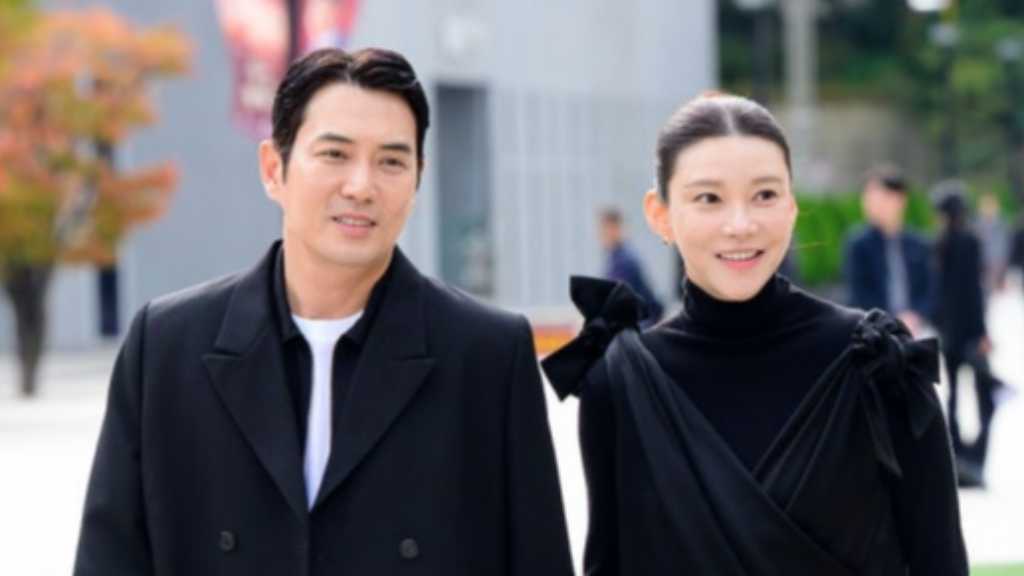
On the afternoon of the 15th, a 2027 S/S fashion show for the brand MISS GEE COLLECTION was held at the Music Plaza of the Seoul Arts Center in Seocho-dong, Seoul. Celebrities including Joo Sang-wook and Cha Ye-ryun, Kim Yuna and her son Min-jae, Oh Hyun-kyung and her daughter Chae-ryeong, Hyosung, Lee Jung-hyun, Hong Eun-hee, Han Ji-hye, Ahn Hyun-mo, Cha Si-youn, Kim Sung-ryung, Kim Wan-sun, Park Kyung-rim, and Choi Myung-gil attended. The article notes it is based on local media coverage and that photo quality may vary.

On the afternoon of the 7th, an open talk for the film “Day and Night” was held at the Busan Cinema Center area during the 31st Busan International Film Festival. Kim Min-ha, Shim Eun-kyung, Joo Jong-hyuk, Han Sun-hwa (formerly Secret’s Sunhwa), Jeong So-yeon, Kim Dong-hwi, and director Kim Jong-kwan attended.

On the afternoon of the 6th, Kim Min-ha, Shim Eun-kyung, Joo Jong-hyuk, Han Sun-hwa (formerly Secret’s Sunhwa), Jang Ryul, Jeong So-yeon, Kim Dong-hwi, Lee Hee-jun, and director Kim Jong-kwan attended the red carpet event for the opening ceremony of the 31st Busan International Film Festival, held around the Busan Haeundae District’s Busan Cinema Center for the opening film 'Day and Night Are Opposite.' The article is based on local media coverage. Please note that the photos may vary.

On the afternoon of the 6th, at the 31st Busan International Film Festival held around the Cinema Center in Haeundae District, Busan, a press conference was held for the opening film "Day and Night Are for Each Other." Kim Min-ha, Shim Eun-kyung, Joo Jong-hyuk, Han Sun-hwa (formerly Secret's Sunhwa), Jang Ryul, Jeong So-yeon, Kim Dong-hwi, and director Kim Jong-kwan attended.

Secret, the girl group that debuted in 2009, is returning to Tokyo with a new 3-member lineup. They will release the mini album “Secret Flavor” in 2026, including 2026 versions of their hit songs, and hold the fan meeting “2026 SECRET JAPAN FANMEETING ‘Secret Flavor’” on October 11, 2026, at EDOCCO STUDIO. Tickets include a high-touch send-off and an original wristband.

YouTuber Park Wi informed Seoul City of his intention to resign as a public relations ambassador amid continued controversy over his release of CCTV footage showing a fall accident on the KTX. After criticism, he deleted the video and apologized. Seoul City will proceed with internal procedures.

YouTuber Park Wi, husband of former Secret member Ji-eun, apologized and deleted a CCTV video showing a KTX accident involving his wheelchair and a social service worker. He said he wanted to raise safety concerns, but many criticized him for publicly highlighting a personal mistake.

Yoo Seon-ho expressed his thoughts on portraying a Japanese yokai in the film 'Teaching Practice' during a press conference. He shared his unique experience of learning Japanese, stating he had no prior knowledge and practiced intensively, even dreaming in Japanese. The film, set to release in South Korea on May 13, features a horror-comedy plot involving college students facing supernatural challenges.

ZUU has left VINE Entertainment to embark on a solo career after her contract with SECRET NUMBER expired on April 8, 2026. The agency thanked her for her contributions and expressed support for her future endeavors. This follows the departure of other members, with SECRET NUMBER planning to continue in a new form.

MELONii, a versatile solo artist fluent in four languages, debuted on March 31 with the single "Risky Risky." Formerly a member of SECRET NUMBER, she aims to blend her love for J-POP with her own melodies. Her debut reflects nostalgic Y2K sounds, and she invites fans to explore her music video and join her new fan community.


